10 december 2025
Researchers from the National Technical University of Athens have developed a lightweight and flexible film that could play a key role in the next generation of electronic devices and energy-storage solutions. This study, supported by the SUBBIMATT project, demonstrates how a smart combination of nanostructured carbon and conductive polymers can lead to innovative materials with improved performance.
The team produced ultra-thin films consisting of vertically aligned carbon nanofibers (CNFs). These nanofibers were embedded in a flexible polymer called poly(methyl methacrylate) (PMMA) and then coated with polyaniline (PANI), a well-known conductive polymer. The resulting material behaves like a tiny “carbon forest”, where millions of nanofibers stand upright on a surface, similar to densely packed blades of grass forming a soft and flexible carpet. This highly ordered structure provides both mechanical flexibility and a direct pathway for electrical conductivity.
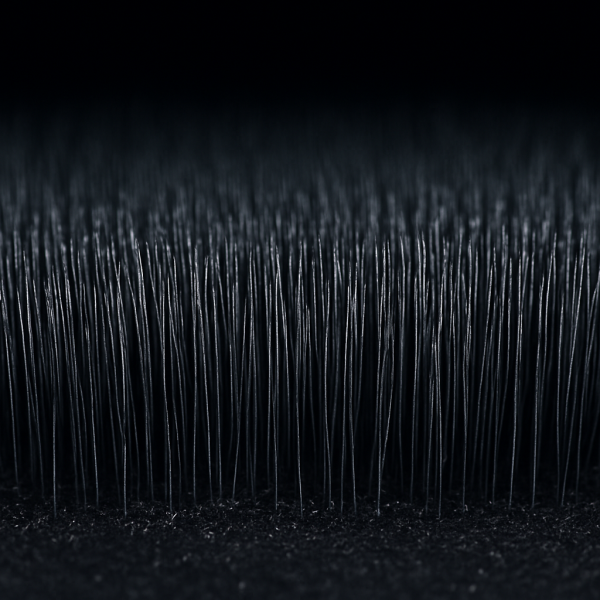
To fabricate this advanced structure, the researchers used a simple two-step chemical vapor deposition (CVD) process. In the first step, the CNFs are grown in a furnace using a floating catalyst approach, which enables the controlled formation of clean and aligned nanostructures. In the second step, the CNF “forest” is coated with the flexible PMMA polymer and carefully detached from the initial silicon substrate, creating a self-supporting film. Finally, a thin layer of PANI is deposited through electropolymerization, further enhancing the material’s ability to store and transport electric charge.
Laboratory tests confirmed several promising features. The films can bend without breaking, remain stable in liquid environments, and show good electrochemical activity after the addition of PANI. These characteristics make the material suitable for applications such as flexible electrodes, wearable electronics and supercapacitors. The study also highlights that further improvements will be needed before the films can be used in high-performance batteries, including lithium-based systems.
This work represents a valuable contribution toward smart and sustainable materials for the energy transition. The simplified fabrication process developed by the research team supports SUBBIMATT’s ambition of designing bio-based and bio-inspired materials for future industrial applications.
The article “Thin and Flexible PANI/PMMA/CNF Forest Films Produced via a Two-Step Floating Catalyst Chemical Vapor Deposition” was published in Materials (2024).

 “Co-Funded by the European Union (Project 101129911). Views and opinions expressed are however those of the author(s) only and do not necessarily reflect those of the European Union or the European Health and Digital Executive Agency (HADEA). Neither the European Union nor the granting authority can be held responsible for them.”